Precise CO₂ dosing for controlled and reproducible cultivation processes
Microalgae combine high protein content with efficient cultivation, opening up new opportunities for sustainable food and feed applications. A key factor in developing microorganisms into high-performance production processes is precisely controlled cultivation – with stable process conditions and a reliable gas supply in photobioreactors or fermenters.
To convert this biological potential into protein-rich biomass as efficiently as possible, growth conditions must be precisely controlled. In addition to light, temperature, and pH, gas supply plays a central role in this process.
Application
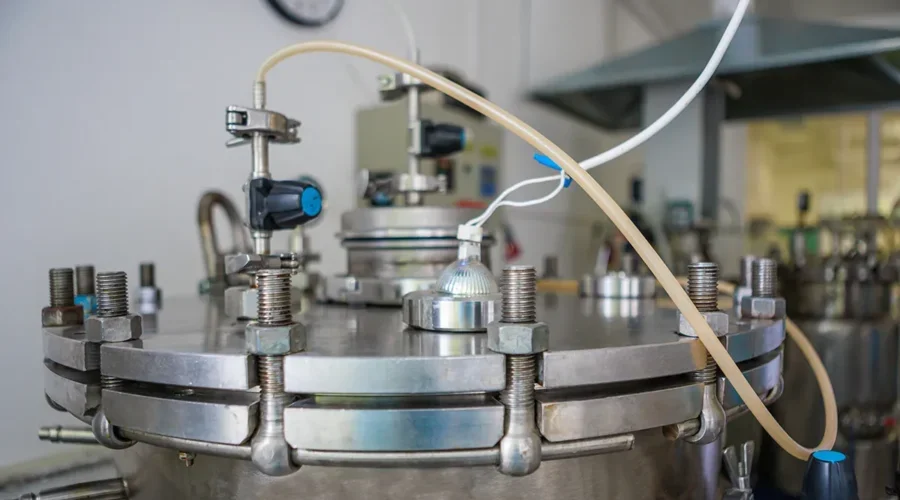
Microalgae are cultivated under controlled conditions in photobioreactors. With the help of light, they use CO₂ as a carbon source to build new biomass. How well this process works depends, among other things, on how much CO₂ is available and how efficiently it is introduced into the culture.StudiesshowthatboththeCO₂ concentrationintheinletandthegasflowrateinfluencemasstransferand, consequently, biomassproductivity.
The gas delivery system fulfills several functions: It supplies the culture with CO₂, supports mass transfer, and can help remove excess oxygen from the reactor. For research and process development, it is therefore important to precisely adjust the gas flows and maintain their reproducibility.
Challenges
Especially in small photobioreactors and laboratory setups, even slight changes in the gas supply can affect cultivation conditions. To ensure comparable experimental results, CO₂ and air flows must therefore be reliably measured and controlled.
Conventional volumetric flow meters can also be affected by pressure and temperature.Thermalmassflowmetersandmassflowcontrollers, ontheotherhand, directlymeasurethemassflowrateoragasflowratereferencedtostandardconditionsandarethereforeparticularlywell–suitedforprocessesthatrequirereproduciblegasdosing.
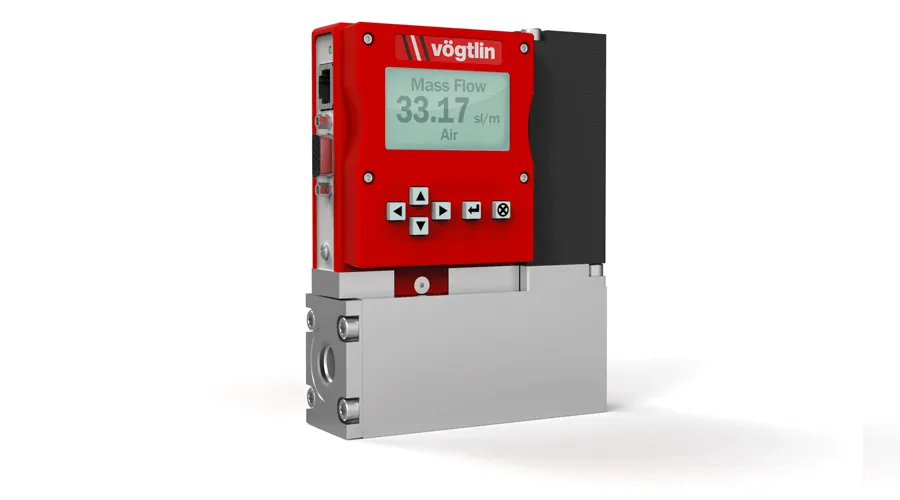
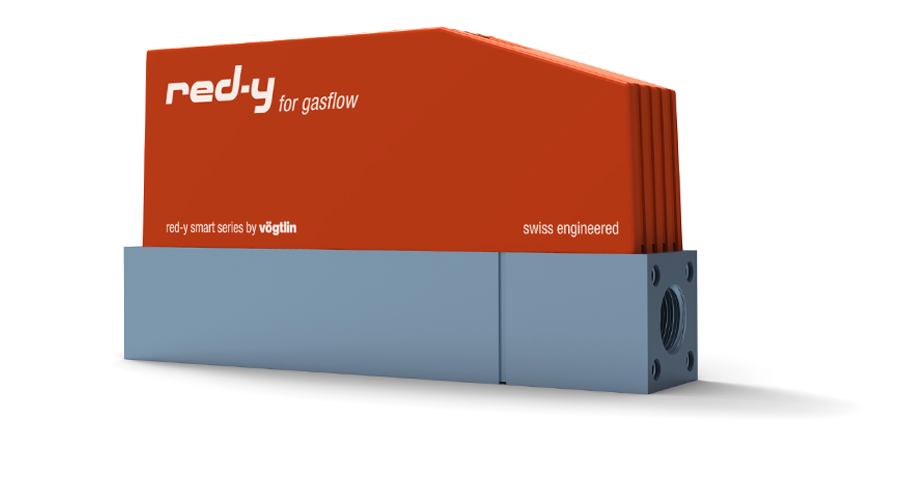
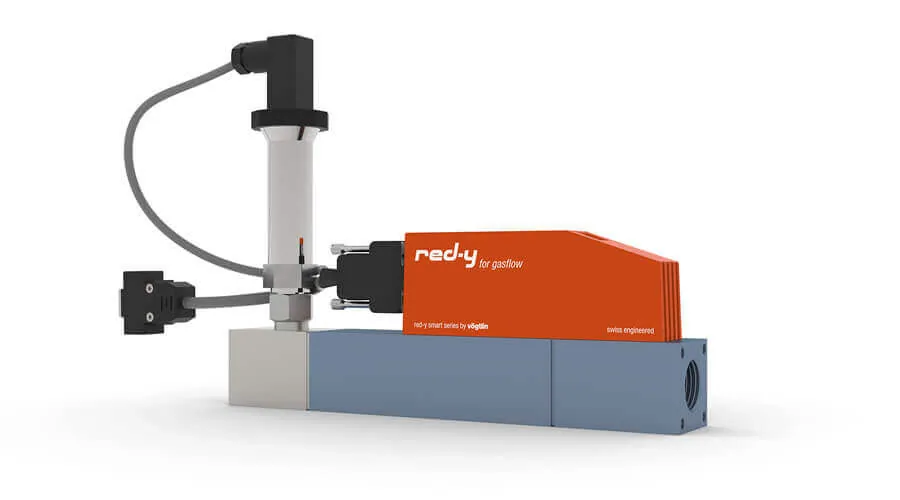
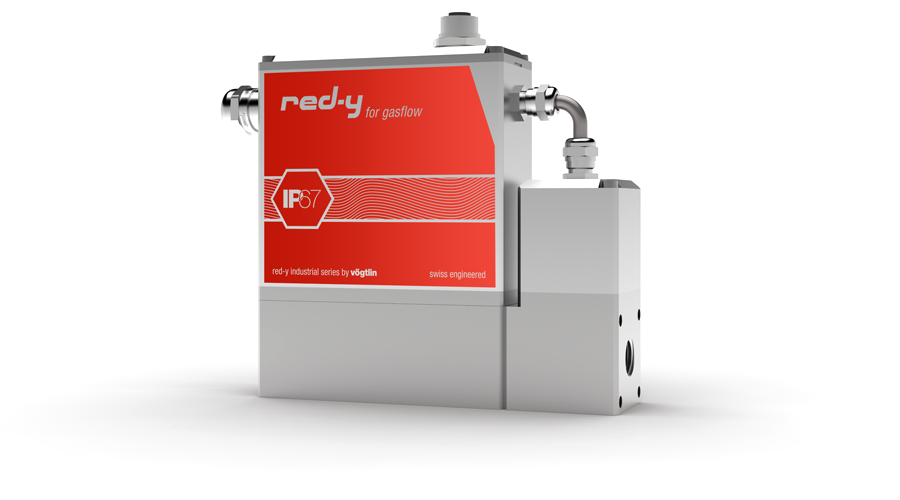
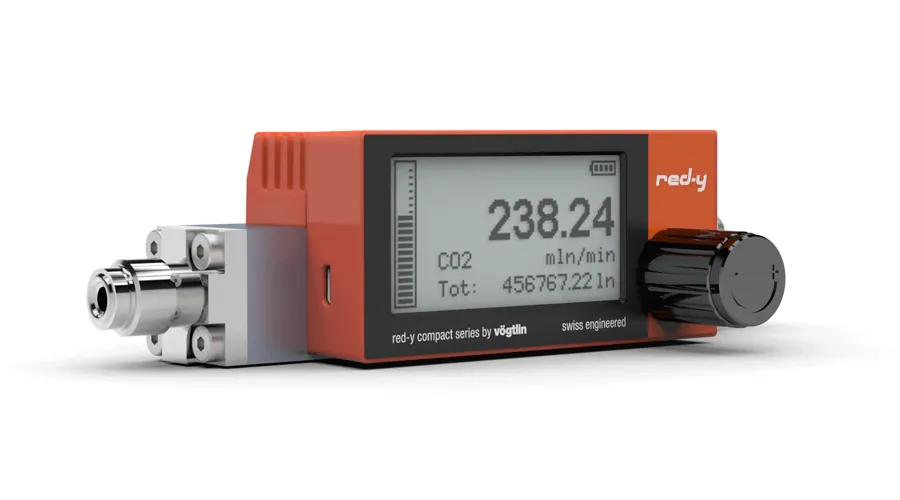
For controlled gas supply, Vögtlin offers various solutions for measuring and controlling CO₂, air, and other process gases.
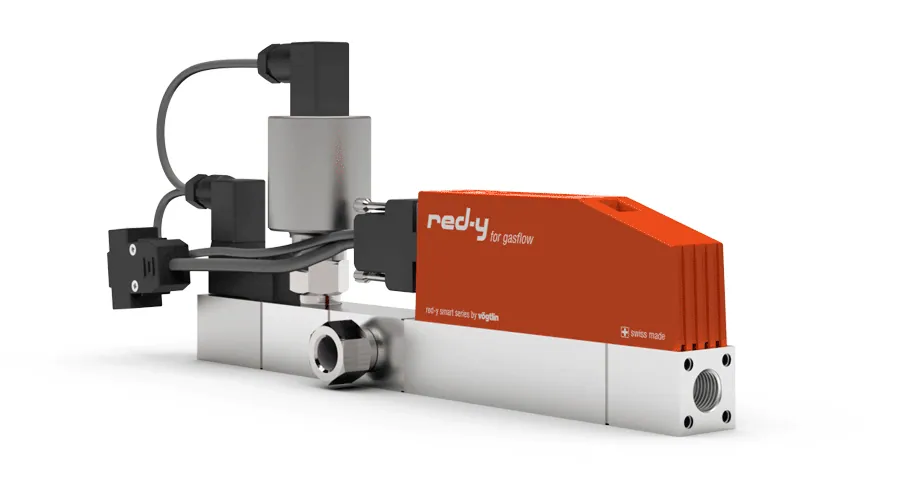
The red-y smart series is suitable for the precise measurement and automatic control of gas flows. The devices use MEMS sensor technology and offer both analog and digital interfaces.Dependingonthemodel, accuraciesofupto ±0.3% ofthefullscalevalueplus ±0.5% ofthemeasuredvaluearepossible.
In microalgae cultivation, it is not merely a matter of supplying CO₂. What is crucial is how precisely and reproducibly it is fed into the process.
Precise mass flow measurement and control provide the necessary foundation for this. Researchers can set defined cultivation conditions, better compare experiments, and specifically investigate the influence of various process parameters.
In this way, a biological process becomes a controllable development process—and microalgae may become an important source of protein for the nutrition of the future.